
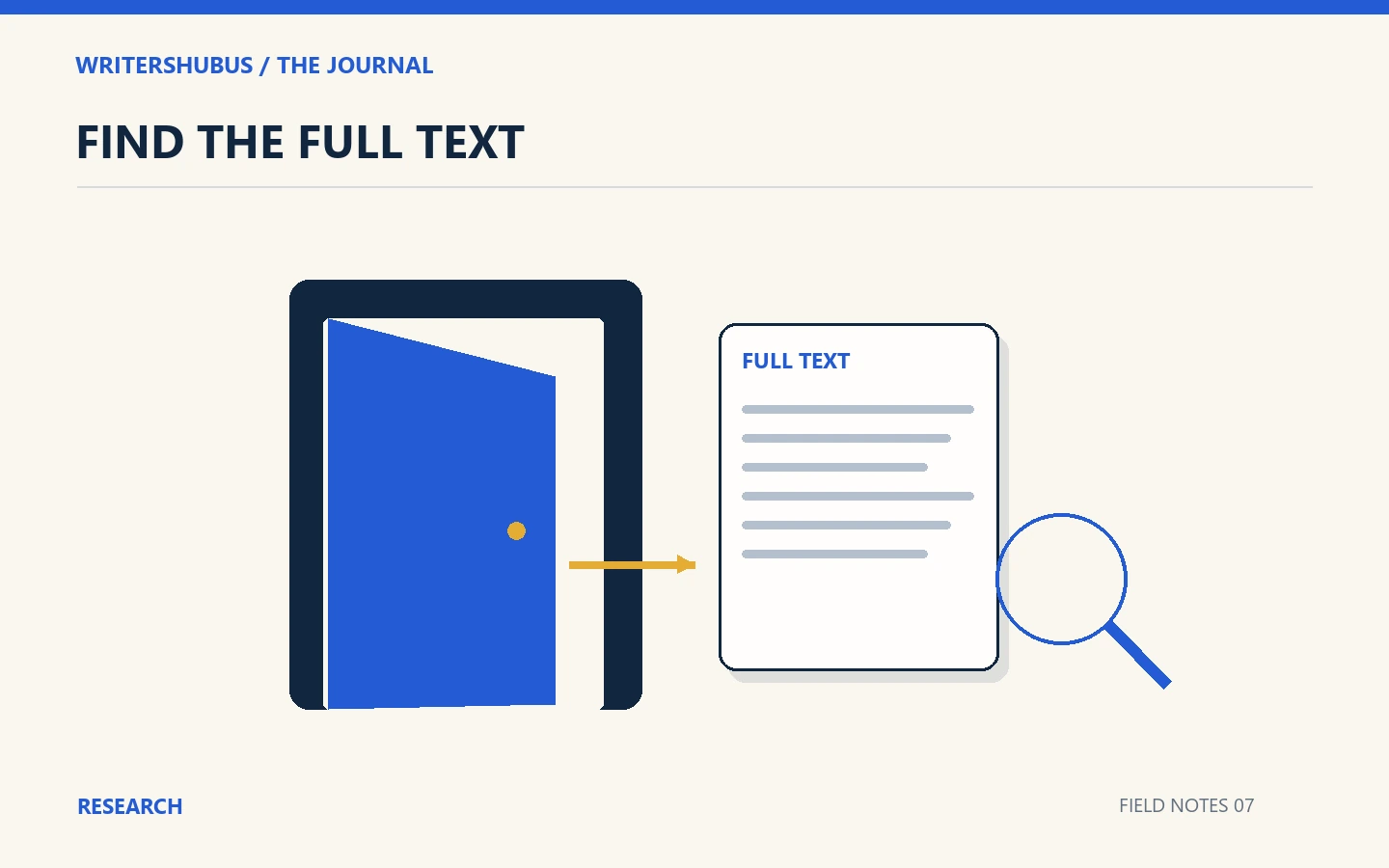
How to Find Research Papers Behind Paywalls Legally
Try library access, authorised open versions and document delivery, then check which version of a paper you have found.
7 min readBuild a question worth investigating, keep traceable notes and decide what the evidence can support.
Read in order, or choose the guide you need today.

Narrow your subject into a question that can guide your reading.
3 min read
Keep source material separate from your interpretation as you take notes.
7 min read
Examine where sources disagree before you form a conclusion.
7 min readTry library access, authorised open versions and document delivery, then check which version of a paper you have found.
7 min read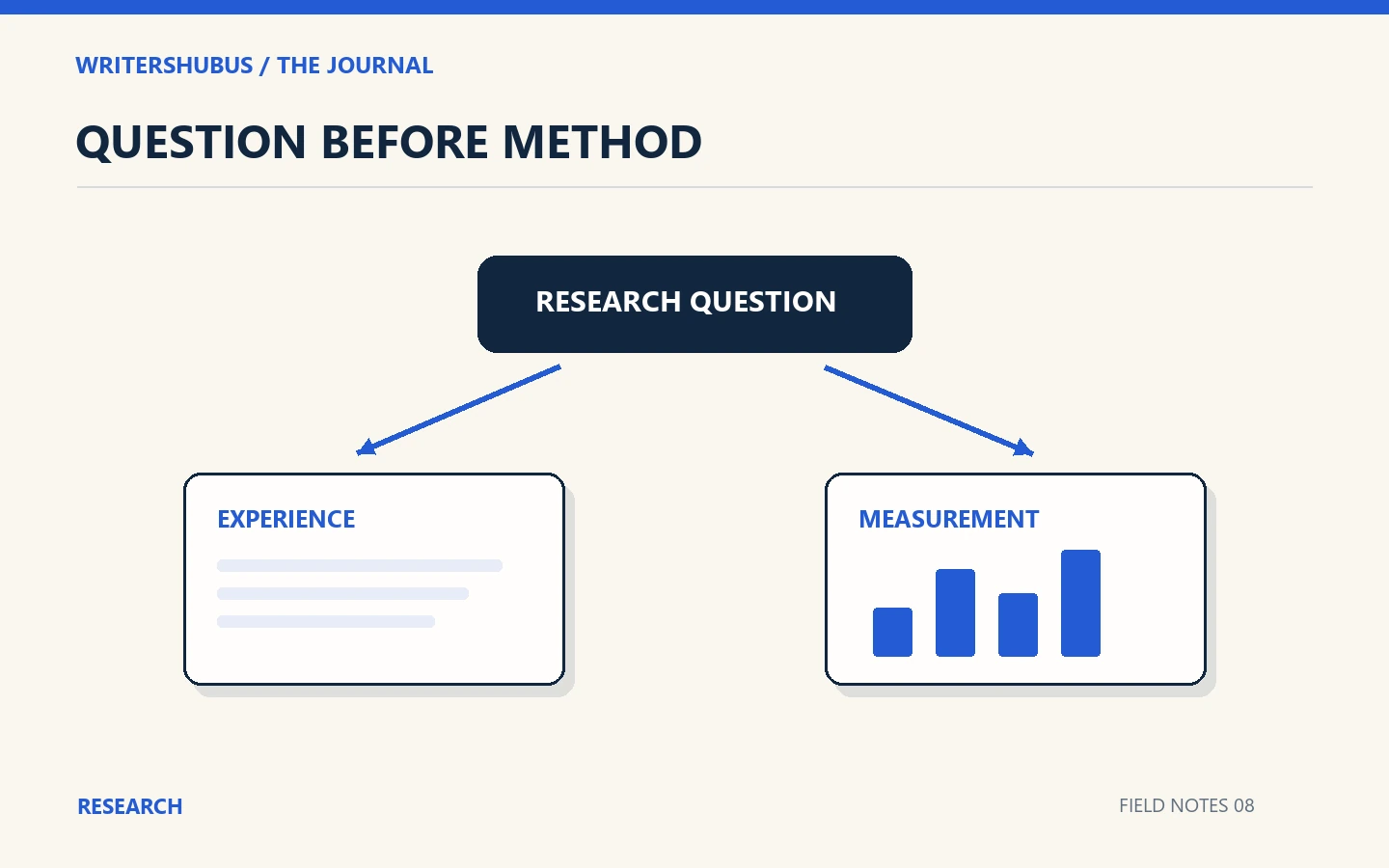
Connect your research question to evidence, sampling and analysis using a side-by-side hypothetical project.
6 min read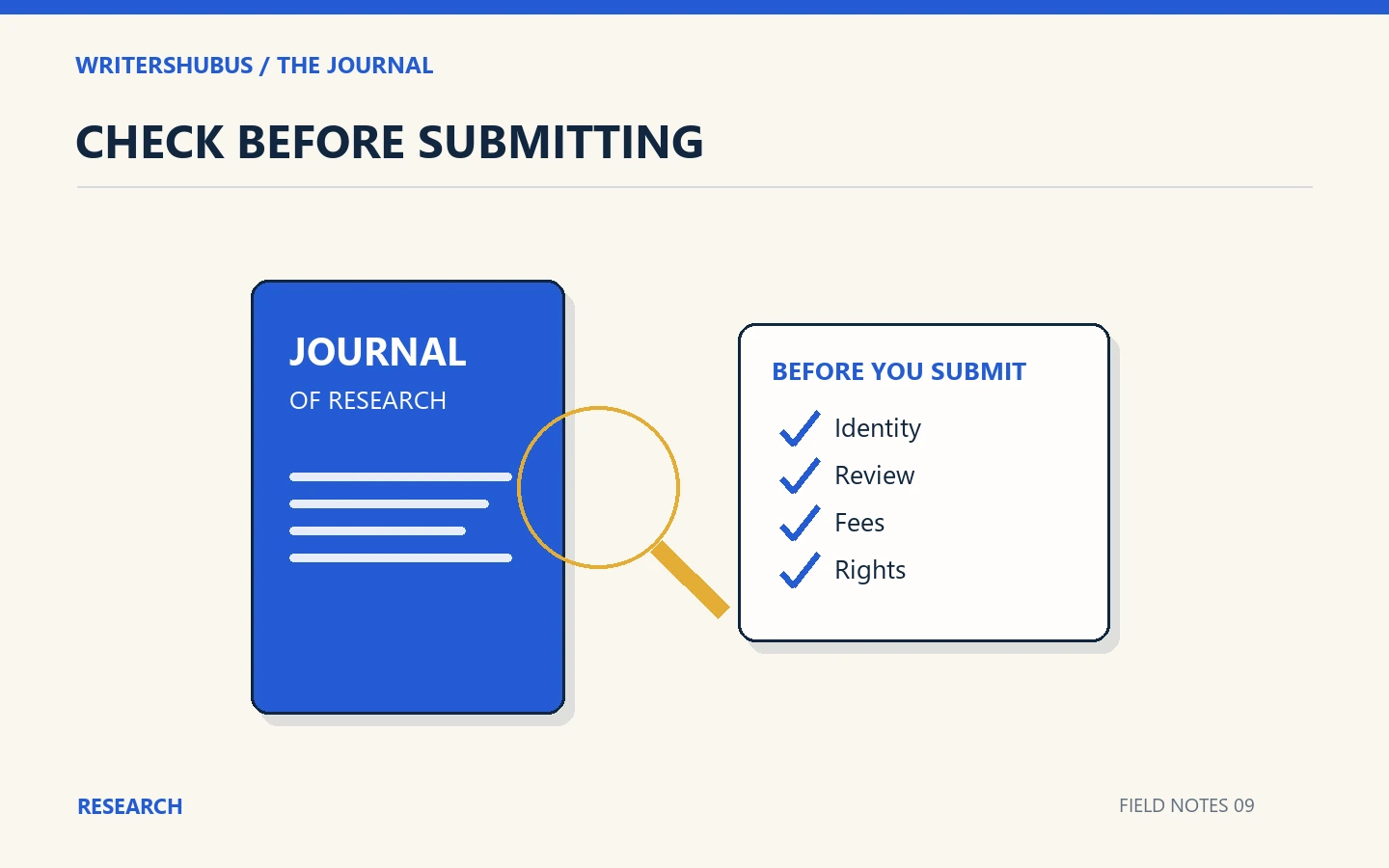
Check a journal’s identity, review process, fees, indexing claims and fit before sending your manuscript.
6 min read
Choose one supported takeaway, design a figure that explains it, and test the printed or digital poster before the session.
7 min read
Record exact database queries, dates, filters and exports so another person can retrace the search and understand what you kept.
7 min read
Link questions to a decision, give respondents clear options, and pretest the form before collecting answers.
7 min read
Calculate both kinds of change, check the denominator, and write a comparison that readers can reproduce.
6 min read
Organise observations, methods, findings and interpretation into a clear report without inventing missing details or overstating the evidence.
7 min read
Move beyond a list of links: describe, evaluate and explain each source’s role while keeping citations and hypothetical examples honest.
7 min read
A clear search process for moving from a broad web search to credible academic books, articles, and reports.
4 min read
Check a specific online claim by tracing its origin, examining evidence and looking beyond a page’s design, domain name or popularity.
7 min read
Choose primary, secondary, and tertiary sources by the question you are asking, not by assuming one category is always best.
3 min read
A focused method for reading research when time is limited: set a question, use the article’s structure, preserve the source, and explain the point.
3 min read