
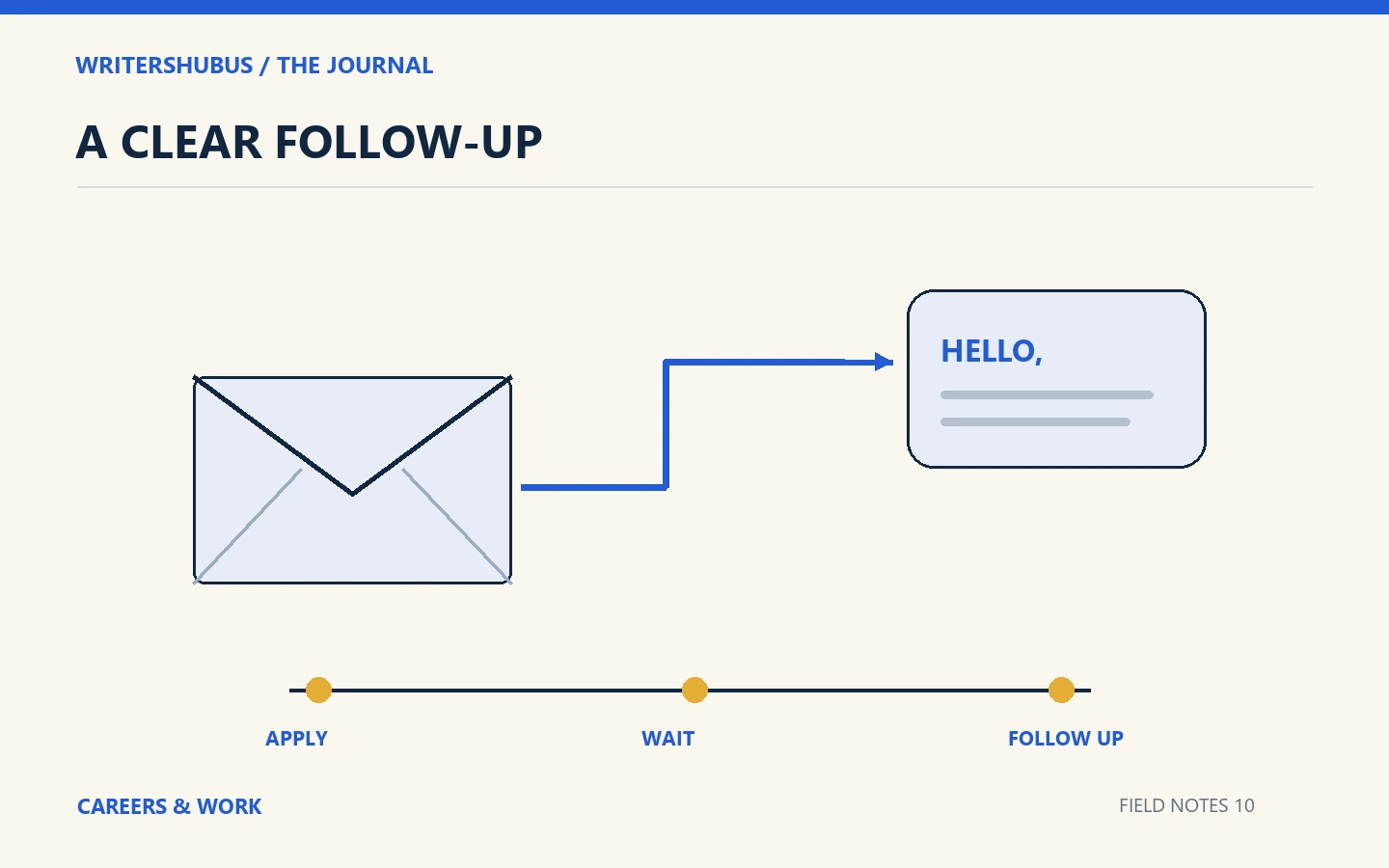
How to Follow Up After a Job Application or Interview
Choose the right purpose, channel and timing for a concise follow-up, with adaptable messages for different stages.
7 min readExplore a direction, learn from useful conversations and make your contribution easier for others to build on.
Read in order, or choose the guide you need today.

Identify the work you want to explore before committing to a job title.
3 min read
Ask focused questions that help you understand a role or field.
7 min read
Make decisions, responsibilities and next actions clear when work changes hands.
7 min readChoose the right purpose, channel and timing for a concise follow-up, with adaptable messages for different stages.
7 min read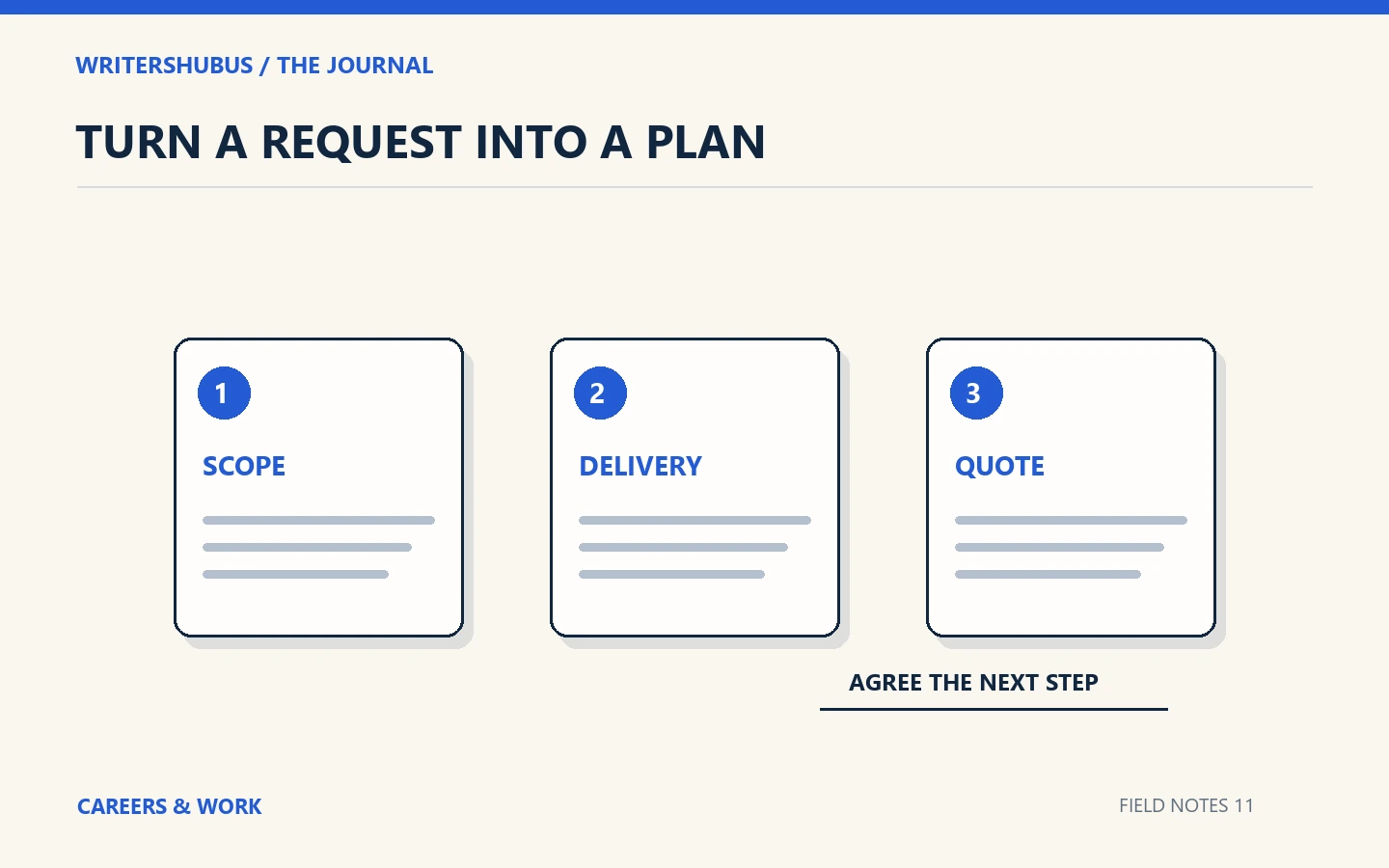
Define a deliverable, inputs, review process, schedule and price assumptions before asking a client to agree.
7 min read
Explore work options, describe your real experience and build a manageable career plan alongside your season.
7 min read
Match wage and price-index periods, convert both amounts to the same dollars, and interpret the result alongside your own spending.
6 min read
Work out whether a request is a correction or an addition, then explain the effect on deliverables, price and timing.
6 min read
Pick people who observed work relevant to the role, ask permission, and give each reference the right context.
6 min read
Check the job and recruiter through an independent channel before sending documents, opening a portal or moving money.
6 min read
Build a weekly study system that respects work shifts, travel, fatigue, and the real amount of focused time you have.
4 min read
Build credible evidence from classes, projects, volunteer work, and everyday responsibilities before you apply for internships.
3 min read
Create a small, honest portfolio that shows your skills, projects, process, and growth before an application deadline arrives.
3 min read
A practical guide to asking clear questions, sharing context, and moving work forward with confidence.
4 min read
Translate critical thinking into practical workplace habits: clarify the problem, check evidence, compare consequences, and explain your reasoning.
3 min read
Build professional relationships through curiosity, preparation, useful follow-up, and small contributions—not transactional networking.
3 min read
Choose career skills with real role evidence, an honest practice path, a visible project, and a clear review point.
3 min read
Move from an attractive idea to a bounded test with a clear audience, prediction, measure, and stopping rule.
3 min read
Build a stronger résumé from honest evidence in coursework, projects, volunteering, and small responsibilities—not inflated job titles.
3 min read
Use interviews, small experiments, and real behavior to test demand before making a large investment.
3 min read
Prepare for an interview with honest evidence stories, role-specific research, useful questions, and practical details that protect your attention.
3 min read
Your resume does not need years of job titles. It needs honest evidence that you can learn, contribute, communicate, and follow through.
3 min read