
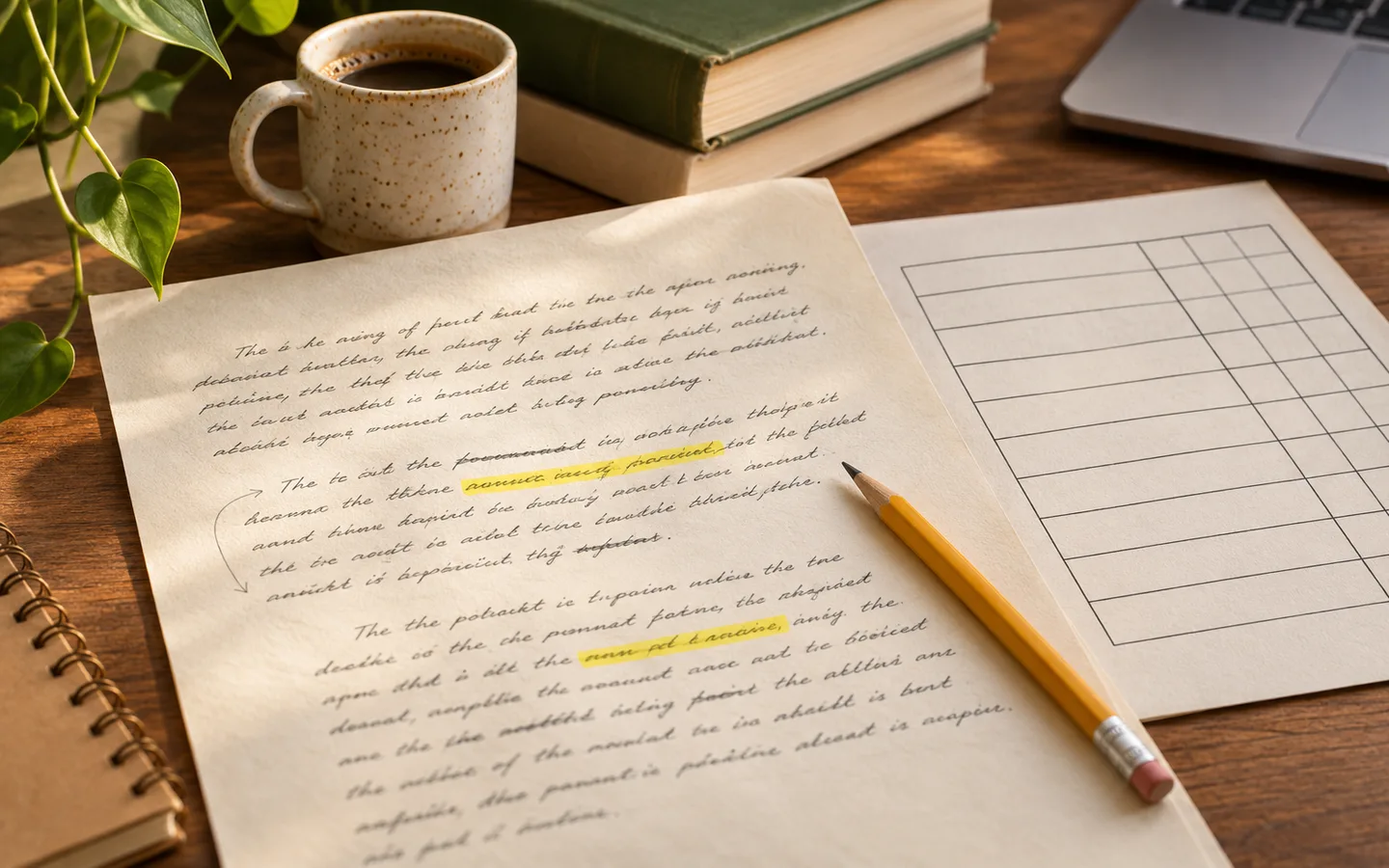
The assignment is due tomorrow. You have a complete draft and a rubric with four columns of descriptions. Reading it end to end tells you what the instructor values, but the words “clear,” “thoughtful” and “well supported” do not tell you what to change on page three. To make the rubric useful, turn its criteria into tests you can run on the draft.
This is a method for revising your own work before submission. It works with papers, reports and many presentations because the starting point is the same: identify what the evaluator needs to see, find the evidence in the work and repair the highest-priority gap.
Put the prompt beside the rubric
Read the assignment prompt for the required deliverable, audience and constraints. The rubric usually explains how work is judged. The prompt often carries practical conditions such as the permitted source types, length, file format and required sections. Keep both open so you can check a revision against the full task.
Carnegie Mellon's Eberly Center describes a rubric in terms of criteria, descriptions of performance and levels of achievement. Start with one criterion at a time. “Evidence” is the aspect being evaluated. A description such as “explains the relevance of each source” tells you what the evaluator is looking for in that aspect. Those pieces give you a better test than trying to guess what overall grade the draft deserves.
If the documents appear to conflict, identify the two phrases and ask which controls. For example, a general rubric might mention a bibliography even though the prompt asks for a separate source log. A quick, exact question gives the instructor a chance to resolve the ambiguity. Meanwhile, make the revisions that are clearly required in both documents.
Translate descriptions into evidence you can point to
Replace a broad phrase with a question about something visible. For an argument criterion, ask which sentence makes the central claim and where the draft explains why a reader should accept it. For organization, ask whether the first sentence of each paragraph helps the reader predict what that paragraph does. For evidence, find the source, the specific result and the sentence that connects it to your claim.
Do the check with a line number, heading, timestamp or slide number. If the evidence is supposed to appear across the entire draft, check a representative section first and then inspect the places where the same issue would matter most. A presentation with a clear opening can still have a confusing transition at its crucial figure. A paper can cite every fact in the introduction and leave its central claim unsupported.
In a hypothetical environmental policy assignment, the rubric asks students to discuss a trade-off. The draft says an overnight bus would improve access, then lists more benefits. The writer highlights the exact place where the trade-off should appear and writes a revision task: “Compare the benefit to late-shift riders with the cost of a second driver, and explain the uncertainty in the ridership estimate.” The task is now specific enough to complete.
Work out which gap deserves the first revision
Check explicit weights if the rubric provides them. A missing discussion section in a criterion worth a substantial share of the assignment can merit more attention than minor punctuation. However, a required part of the deliverable may matter even when it has no visible percentage. Check the instructions for eligibility, completeness and formatting requirements before treating any one column as optional.
Then look for a change that improves more than one part of the work. A precise thesis can make the evidence easier to select and the conclusion easier to write. A better legend can make a figure both clearer and more accessible. Prioritize those structural fixes while you still have time to make them. If the organization remains hard to see, use the Journal's reverse outline guide to see which paragraphs are doing the work the rubric calls for.
Avoid spending the whole session rewording a strong paragraph because it is the easiest one to open. Make a short queue of actions. Start with the change that would most improve the reader's ability to see that you have met the assignment.
Revise the weak spot and then read the result in context
Suppose the criterion asks for analysis and your paragraph describes a result without interpreting it. Write the connection in rough language first. What does this result support? What does it leave open? Why does that matter to the question? If the available evidence cannot carry the current claim, narrow the claim. That is often a better use of time than adding a loosely related quotation.
Once you have the new sentences, reread the paragraph above and below. A section-level change can create a repeated explanation or leave a transition pointing to an idea you moved. Make the small neighboring edits needed for the new version to read cleanly. If you move a source or figure, check that the in-text citation and reference still point to the right item.
This is also the moment to use earlier instructor feedback that applies to the same skill. A past note about describing rather than interpreting evidence can help you see the issue again. The Journal's guide to revising after feedback explains how to decide which feedback transfers to a new draft. Current assignment requirements still govern the current work.
Use another reader for a narrow check
If the class permits peer review, give a reader one criterion and a relevant section. Ask them to point to the sentence where they see the claim or explain what they think the graph shows. A response that differs from what you intended gives you something to inspect. A general verdict that the draft looks good tells you less about whether the criterion is visible.
When peer review is unavailable, create a similar check for yourself. Close your notes, read the passage in the submitted order and write what you think an unfamiliar reader would conclude from it. Then compare that conclusion with the prompt. If you need the notes to make sense of the paragraph, the missing explanation probably belongs in the draft.
Check the rubric against a strong and a weak passage
Pick a section that already meets the criterion and compare it with one you marked for revision. In a hypothetical source analysis, one paragraph identifies the author, explains the source's setting and ties the evidence to a narrow claim. Another gives two quotations without saying why they matter. You can use the first paragraph to identify the missing kind of work in the second. Its wording and structure can differ because the evidence has a different job.
If the rubric uses broad descriptions across several levels, inspect where the wording changes. A satisfactory response may describe what a study found, while a stronger one may justify why that study is relevant and discuss a limitation. Write one sentence addressing the specific difference. Read it in context and check that the new detail is supported. This uses the levels to guide a revision without assuming that you can predict the grade.
Leave time for the submission requirements
Give yourself a final pass with the actual export open. Verify required headings, source list, page range and the file type the course requests. If the rubric calls for a legible figure, check the figure at the size the instructor will see. A chart that was readable in an editor may be tiny in a PDF. Confirm that any permitted attachments are included in the final attempt.
Keep the review page for the next assignment. Write one criterion you initially misread and one revision that made a real difference. That record can help you notice the same kind of problem earlier next time. For help interpreting an assignment or discussing revisions to your own draft, see WritersHubUS writing and editing support.