
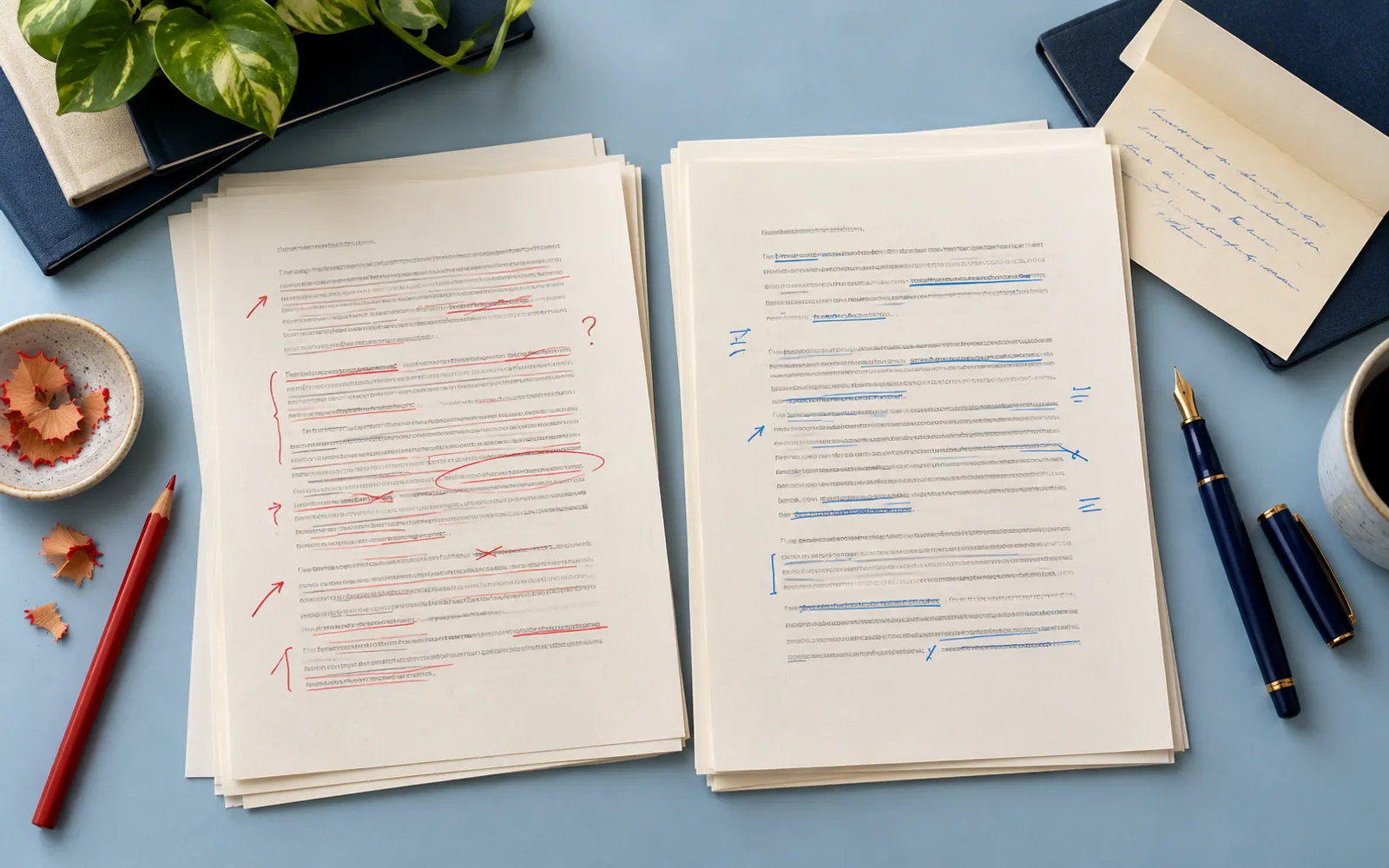
Feedback can feel like a judgment of you when it is really information about how a reader experienced the draft. The goal of revision is not to accept every suggestion. It is to decide which comments reveal a real problem, make a plan, and strengthen the piece without erasing the choices that are yours to make.
Read the comments once without editing
Your first response may be defensive, relieved, or confused. That is normal. Read the feedback all the way through, then put it aside for a short break. Editing while you are reacting can lead to random changes that make the draft less coherent.
When you return, group the feedback into patterns. Are several comments pointing to an unclear claim, weak evidence, confusing order, missing context, or sentence-level errors? A pattern deserves more attention than one isolated preference.
Separate the assignment requirements from preferences
Check the rubric and prompt. If a comment identifies a requirement you missed, treat it as a priority. If a reader says they were confused, investigate why. If a comment simply suggests a different phrase or style, decide whether it serves your purpose.
You can respectfully keep a choice when you understand the tradeoff. Voice is not refusing feedback; it is making informed decisions about what the writing needs.
Revise from the largest issue to the smallest
Do not begin by fixing commas if the central point is hard to find. Start with the purpose of the piece. Can you state the main claim in one or two sentences? Does each section help develop it? Is the evidence introduced, explained, and connected to the point?
Next, check structure. Readers should know why one paragraph leads to the next. Add transitions that explain the relationship: contrast, cause, example, or consequence. Only after the argument and order work should you spend time polishing wording and proofreading.
Make a revision map
Write a short list before you reopen the draft: clarify thesis, move the strongest example earlier, explain how the source supports the claim, add a counterpoint, and review citations. Each item should describe an action rather than a feeling. “Make it better” is too vague. “Add two sentences explaining why this statistic matters” is a task you can complete.
Use comments as a map, not as replacement text. When a reader marks a paragraph unclear, ask what you meant it to do. Then rewrite it in a way that meets that purpose.
Keep a version of the original
Save a new version before making large changes. This gives you permission to experiment. You can compare the drafts later and recover a sentence or detail that belonged in the final piece.
A revision history also helps you notice your own decisions. If you changed a paragraph because a reader was confused, write one note about what you clarified. That habit makes future feedback easier to use.
Do a final reader check
After revising, read the draft aloud or ask a new reader to summarize the main point. If their summary does not match your purpose, the draft may still need clearer signposting. Check the rubric, citations, format, and word count last.
Strong revision is proof that writing is a process of thinking. You do not lose your voice when you revise. You make your voice easier for another person to hear.
An example of useful revision
A comment such as “I do not see how this quote supports your claim” is not a request to add more quotations. It points to a missing explanation. Your revision might add two sentences that name the connection, acknowledge a limitation, or change the claim so it matches the evidence. That is stronger than replacing the comment with a smoother sentence.