
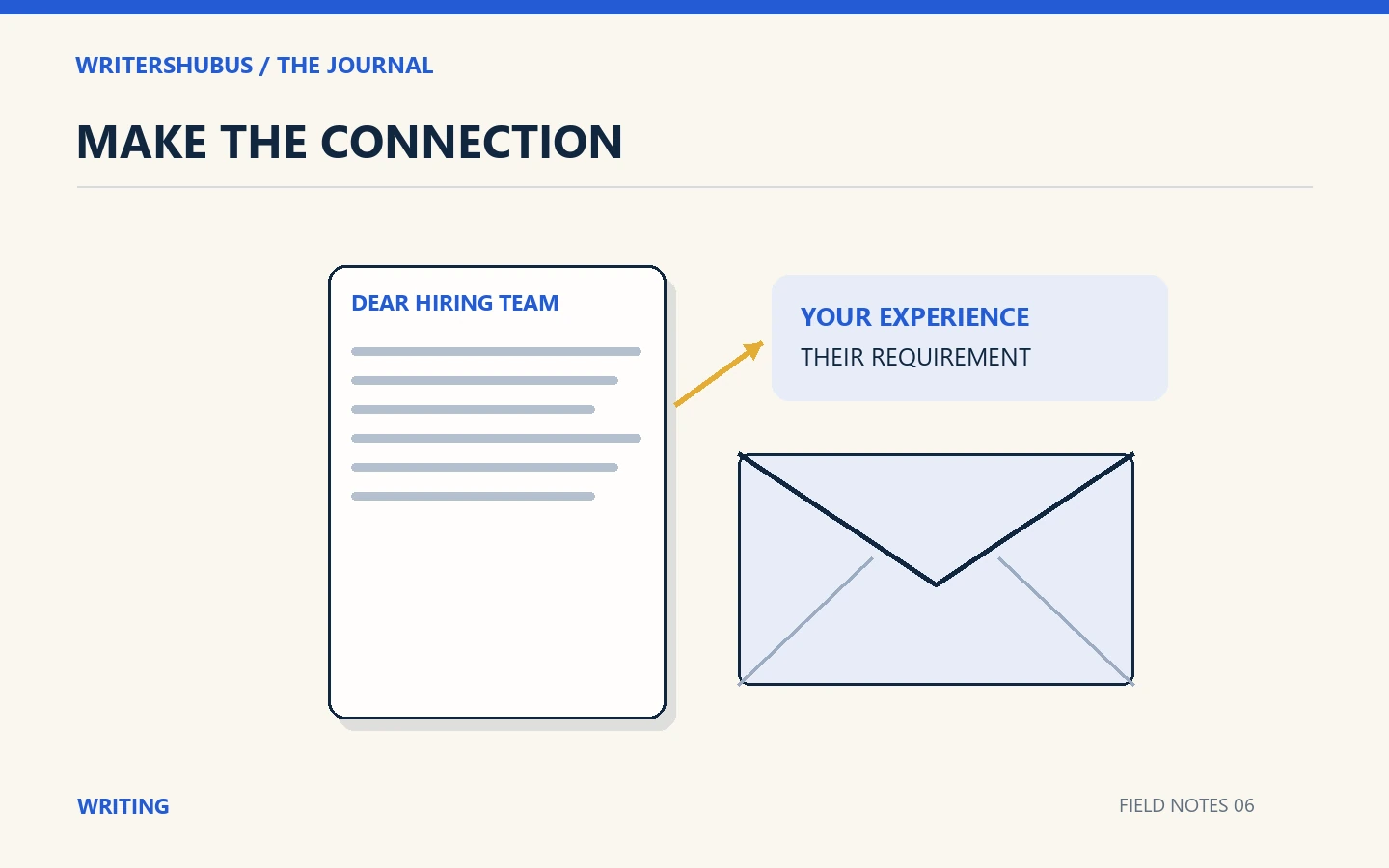
Writing a first cover letter is difficult when the job asks for experience and your experience does not look like a job title. You may have organised an event, handled customers during a part-time shift, completed a demanding class project or managed responsibilities within a team. The challenge is explaining why those experiences matter to this particular employer.
A cover letter gives you space to make that connection. It should select relevant evidence and explain your interest in the role. You do not need to claim experience you do not have, repeat every résumé bullet or describe yourself with a collection of unsupported adjectives.
Check whether the employer requests a letter
Read the application instructions before drafting. Some employers require a cover letter, some make it optional and others provide no place to submit one. Follow the requested format and any specific questions. Do not send extra material through an unrelated channel simply because a generic guide recommends a letter.
Harvard’s résumé and cover-letter guidance recommends concise, factual letters tailored to the organisation and supported with examples. Use that approach alongside the employer’s instructions. A strong letter is evidence of how you communicate, but it cannot guarantee an interview.
Save the role description while it is available. Identify the employer, position title, application deadline and essential requirements. If the advertisement is unclear about a qualification, avoid rewriting its meaning to make yourself appear eligible. Check the employer’s official information or ask through the stated contact method.
Choose two needs you can support with evidence
Read the duties and identify what the employer needs someone to do. A role may involve responding to enquiries, maintaining accurate records, presenting information or coordinating small projects. Select the needs for which you have the strongest genuine examples.
Translate broad language into an observable action. “Excellent communication” could mean explaining a process clearly to a customer. “Organisation” might mean tracking event tasks and following up before a deadline. Your letter becomes more convincing when the reader can picture what you did.
Use a preparation table before writing:
| Employer need | Your relevant experience | Evidence you can honestly describe |
|---|---|---|
| Clear written communication | A class project or campus role | The document you produced and who used it |
| Reliable coordination | Event, team or work responsibility | The task, constraint and your contribution |
| Accurate information handling | Research or administrative work | How you checked and organised the information |
The table is a selection tool. It does not mean every experience belongs in the final letter. Choose examples that help the employer evaluate your fit for the actual role.
Find evidence outside formal employment
Consider coursework, volunteering, part-time work, independent projects, student organisations and athletic responsibilities. Explain the work in terms a reader outside the setting can understand. An internal committee title may mean little until you describe the responsibility behind it.
Be precise about your contribution to group work. If a project involved five people, say which part you led or completed. Avoid claiming the entire outcome as your individual achievement. If you cannot separate your contribution clearly, choose a different example or describe the shared work accurately.
Numbers can help when you have reliable records, but they are not compulsory. Do not invent attendance totals, growth percentages or time savings to make a modest example appear impressive. A clear account of a real action is stronger than an attractive result you cannot substantiate.
Open with the role and a specific reason for interest
The opening should identify what you are applying for and why it connects to your interests or experience. Research the organisation through its own current materials. Choose a relevant fact about its work rather than a vague compliment that could apply to any employer.
Avoid copying a company slogan and calling that research. Explain the connection in your own words. If a service, project or customer group interests you, say why that matters to the contribution you could make. Keep the focus on the role rather than turning the opening into a biography.
If you have not found a convincing reason beyond needing work, begin with the responsibilities that interest you and the evidence you can offer. You do not need to manufacture a lifelong attachment to a company you discovered yesterday.
Build the middle around a small number of examples
Use each middle paragraph to connect one need with one example. Explain the situation briefly, describe your action and state the result or learning you can support. Then make the relevance to the role clear.
Do not repeat a résumé entry word for word. The letter should add explanation. A résumé might list that you helped organise a campus event. The letter can explain how you clarified responsibilities, kept information current or responded when a supplier changed a delivery time.
If an example includes a setback, describe your response honestly. You do not need to pretend that every project was a success. A relevant account of noticing a problem, correcting your part and communicating clearly can demonstrate judgment without exaggerating the outcome.
Adapt a worked example to your own evidence
The following is a hypothetical excerpt for an entry-level administrative role. Its experience is invented for illustration and should not be copied as your personal history.
Example
I am applying for the programme assistant position because it combines practical coordination with clear communication. Through a campus volunteering project, I helped keep the task list and participant information up to date for a small event team.
My responsibility was to collect confirmed details, record changes and send a concise update before each planning meeting. When two versions of the schedule began circulating, I compared them with the organiser’s decisions and helped establish one current version. That experience taught me to check information before sharing it and to make the next action clear. I would bring the same care to the programme records and enquiries described in your advertisement.
The example makes a limited, specific claim. It does not invent a productivity percentage or imply professional expertise beyond the experience described. Your version should use the employer’s real priorities and work you can discuss in an interview.
Close with a clear next step
Thank the reader and express interest in discussing the role. Include the information the application instructions request. Avoid promising to telephone on a particular day if the employer asks applicants not to call.
Check availability statements carefully. If you have classes, competition commitments, notice requirements or restrictions affecting your working hours, do not make a promise you cannot meet. You can discuss relevant availability through the appropriate stage of the application process.
Use a professional closing and an accurate name. If you cannot identify the recipient from reliable information, a suitable team greeting is better than guessing someone’s title. Keep contact details consistent with the résumé and application form.
Edit for credibility, clarity and the correct organisation
Read the draft aloud. Replace language you would struggle to explain naturally in an interview. Check every company name, role title and reference to the organisation. A reused paragraph can retain a detail from an earlier application even when the rest of the letter is tailored.
Keep the letter within the employer’s instructions. Where no different length is specified, a concise page is a useful working limit. Use readable formatting that matches your application materials and inspect the exported file before uploading it.
If you use an AI tool to brainstorm or edit, verify every suggested claim and keep the account faithful to your experience. Generic praise, invented achievements and inaccurate employer facts weaken the application. The final document needs to represent you and comply with any application rules about tool use.
Before submitting, ask whether each paragraph helps the employer evaluate your fit. Remove information that merely repeats “I am motivated” in different words. Replace it with one relevant action or a more specific connection to the work.
Get feedback on the story your application tells
Start with a role you genuinely want, select two needs and match each to a real example. If you would like feedback on your résumé, cover letter or application wording, visit WritersHubUS career and application support.
You can ask about application support on WhatsApp. Mention the role and deadline, and describe the help you need without including sensitive identity documents in the first message.